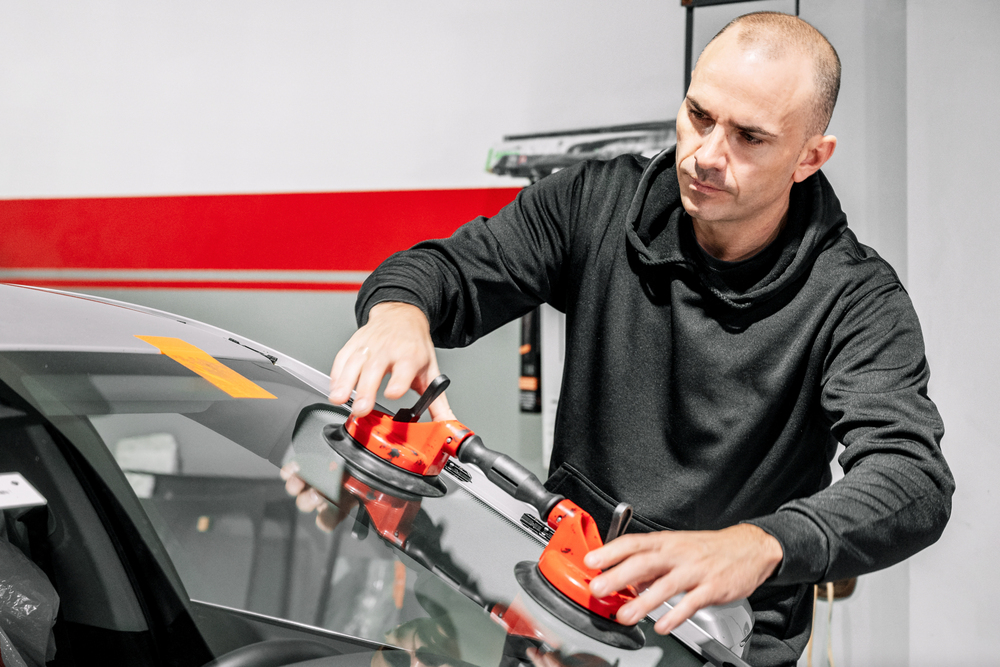

A power window glass off track problem usually becomes obvious at the worst possible time: during a North Texas rainstorm, in a parking lot, or when you need to secure your vehicle overnight. The glass may tilt forward or backward, scrape inside the door, stop halfway, or drop completely. Do not keep pressing the window switch to force it closed. That can turn a manageable window regulator repair into broken glass, damaged trim, or a more expensive replacement.
For drivers in Garland, Dallas, and nearby communities, the priority is simple: protect the vehicle, keep out weather and theft, and have the window inspected by a qualified auto glass professional as soon as possible.
What Does It Mean When Power Window Glass Is Off Track?
Your door window does not move on its own. The glass sits in vertical channels and attaches to a mechanical assembly called a window regulator. When you press the switch, the regulator moves the glass up or down while the channels keep it straight and stable.
When the glass comes off track, it is no longer guided correctly through those channels. It may lean to one side, bind as it moves, or fail to meet the upper weather seal. In some cases, the motor is still working but the regulator clips, cable, guide, or track have failed. In others, worn window channels or a loose glass attachment allow the window to shift out of position.
The symptom can look minor at first. A window that moves slowly, makes a clicking sound, or needs a little help to rise may be warning you that a regulator or guide is wearing out. Taking care of it before the glass falls inside the door can reduce the chance of additional damage.
Common Reasons a Power Window Glass Comes Off Track
A failed window regulator is one of the most common causes. Many modern regulators use cables, pulleys, plastic guides, and mounting clips. Over time, those components can crack, stretch, or break. Once a cable tangles or a clip comes loose, the glass may no longer have stable support.
Impact is another frequent cause. Someone slamming the door hard, an attempted break-in, a collision, or even a sharp bump can shift the glass or damage a guide. If the glass was recently replaced, incorrect alignment or a missing fastener can also cause it to bind or come off track later.
Texas heat plays a role as well. High temperatures can dry out rubber run channels and put extra strain on aging plastic regulator parts. Dirt, leaves, and moisture inside the window channel can make the glass drag as it moves. That extra resistance may eventually overload the regulator motor or pull the glass out of alignment.
Sometimes the issue is electrical rather than mechanical. If you hear no motor sound at all when operating the switch, there may be a bad switch, fuse, wiring issue, or failed motor. If you hear the motor running but the glass does not move correctly, the regulator or glass mounting hardware is more likely the problem. A proper inspection determines which repair is actually needed.
Signs You Should Stop Using the Window
A crooked window is not something to test repeatedly. Stop operating it if the glass is visibly tilted, moves unevenly, makes grinding noises, or drops into the door. Also stop if the glass reaches the top but leaves a gap that allows rain, wind, or outside noise into the cabin.
Do not pull the glass upward by hand while pressing the power switch. The glass edges can be sharp, and a failed regulator can suddenly release or shift. Avoid slamming the door, too. If the glass is loose, that impact can crack it or cause it to fall farther into the door.
If the window is open and you cannot close it, remove valuables from the vehicle and keep it covered as dry as possible until service is available. A temporary plastic barrier can help keep out rain, but it is not a secure repair. Tape should be applied carefully so it does not damage paint, tint, or weather stripping. When severe weather is expected, moving the vehicle into a covered area is the best short-term option.
Why Professional Window Repair Is Usually the Safer Choice
Repairing an off-track car window involves more than lifting the glass back into place. The door panel must be removed without damaging clips, switches, speakers, airbags, vapor barriers, or trim. The technician then needs to inspect the regulator, tracks, channels, fasteners, and glass for the actual reason it came loose.
Simply putting the glass back on track without addressing a broken regulator clip or bent guide often leads to another failure soon after. The window may appear to work for a few cycles, then tilt again or jam in the door. Reliable repair means correcting the underlying issue and aligning the glass so it seals properly at the top of the door.
There is also a real safety concern. Tempered side window glass is designed to break into small pieces, but it can still cause cuts when handled improperly. Door interiors contain moving mechanisms and electrical components. For most drivers, the cost and risk of a do-it-yourself attempt are not worth it when the window needs to be dependable for commuting, school runs, work, or rideshare driving.
What a Window Inspection Should Cover
A thorough inspection starts by checking how the window responds to the switch. The technician listens for motor activity and watches for binding, uneven movement, or a loose glass panel. Then the interior door panel is removed to examine the regulator assembly and the glass mounting points.
The technician should check whether the track is bent, the run channels are worn, the regulator cable is damaged, or the glass clips have broken. If the side glass is chipped, cracked, or shattered, replacement may be the better option. If the glass is intact and the issue is limited to the regulator or guides, repair can often restore normal operation without replacing the window itself.
The final step matters just as much as the repair. The glass should travel smoothly, close fully, and sit evenly in the weather stripping. A window that closes but whistles at highway speed or lets water in is not properly aligned.
Repair or Replacement: What Should You Expect?
It depends on what failed. An intact window with a worn regulator, broken clip, or damaged guide may only need a mechanical repair. If the glass cracked when it came off track, or if it was broken during an attempted theft, side window replacement is typically necessary.
Vehicle make and model affect the repair as well. Some door designs offer easier access to the regulator, while others require more time and careful disassembly. Features such as one-touch auto-up windows, laminated side glass, sensors, or specialty trim can also change the service approach.
Insurance may help when the damage was caused by vandalism, a collision, or another covered event. If you are unsure, a local auto glass provider can help explain the information your insurer may need. The key is not to delay solely because you are waiting for an answer. An open or loose window leaves the vehicle exposed.
Fast Help for Garland and Dallas Drivers
A failed power window can keep you from safely driving, especially when the glass will not stay up. Auto Glass Garland provides practical help for vehicle owners who need car window repair or replacement without adding more disruption to the day. Depending on the damage and vehicle location, mobile service may be an option for a window that cannot be safely driven to a shop.
When calling for service, be ready to share the vehicle year, make, model, door location, and what the window is doing. Mention whether the glass is intact, crooked, stuck open, or inside the door. Those details help the technician prepare for the likely repair and help you get a clearer estimate.
A power window should close smoothly, seal tightly, and stay where you put it. If yours has shifted, do not gamble on one more press of the switch. Getting the glass secured and the cause repaired quickly can protect your vehicle from rain, theft, and a much bigger repair later.